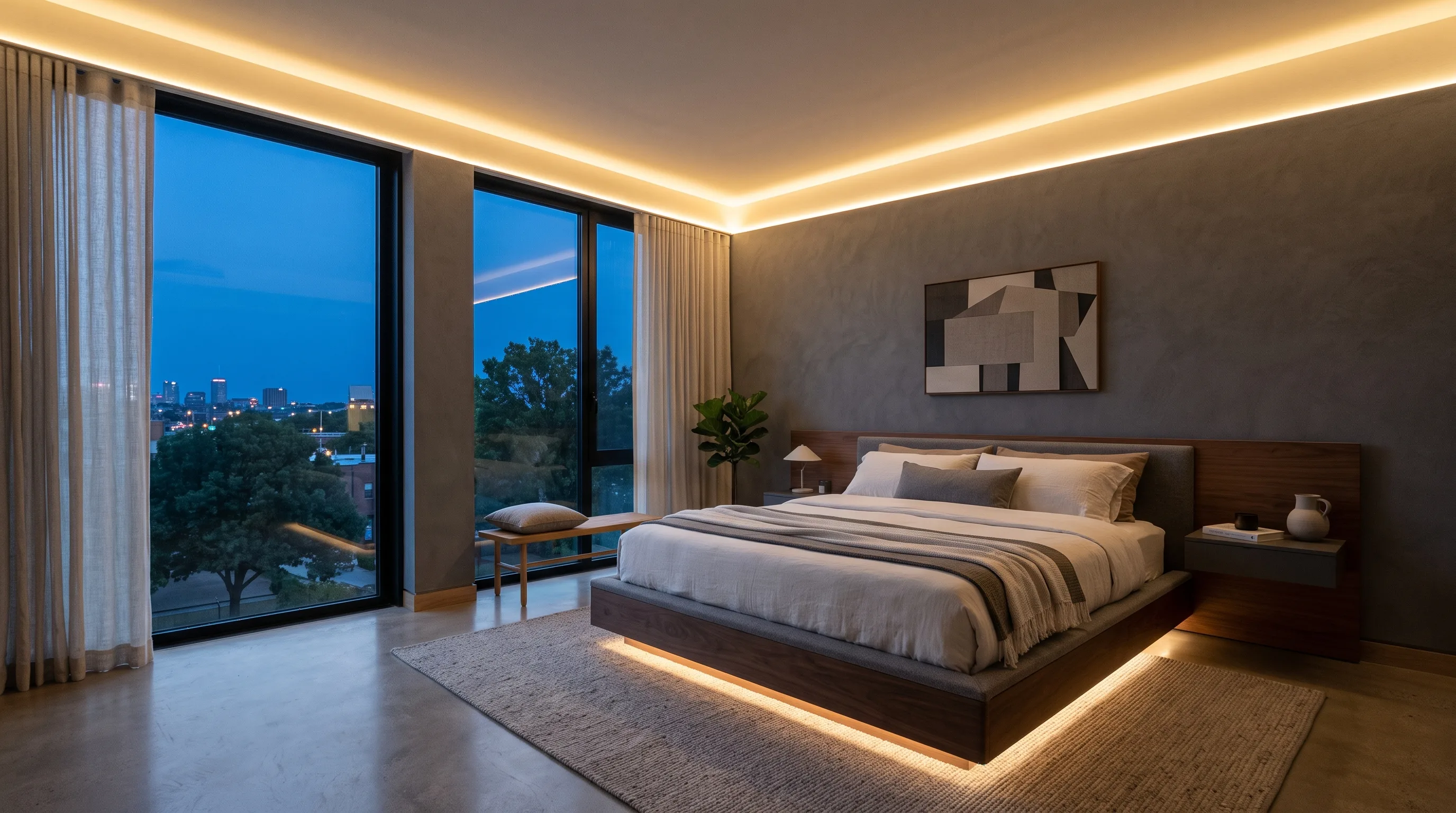
A warm-white cove does three things in a bedroom: it hides the source, it throws light at the ceiling instead of into your eyes, and it makes the room read taller than it is. At night that gives you light filling the room with no visible fixture anywhere — bright enough to get dressed by, low enough to read in bed.
Quick reference
- The source is hidden in a ceiling drop, a coffer, or a deep moulding.
- The light bounces off the ceiling: no hot spot, no hard shadow.
- The room reads taller, because the shadow line at the ceiling disappears.
- 1 to 100% dimming per zone, with no visible flicker.
- The ensuite gets the same treatment, so the suite feels like one system rather than two.
What indirect light actually changes
A ceiling fixture works top-down, from a single point overhead. A cove does the reverse. The bar sits in a channel aimed upward, and the ceiling itself becomes the surface that lights the room.
That is why the room feels bigger. The corner where wall meets ceiling — normally a shadow line — is where the light starts, and the eye reads the ceiling as if it were floating.
Here is the detail people miss: in a bedroom, the sightline that matters is lying down, not standing up. We set the lip height so the bar is invisible from the pillow, not from the doorway, and we check it by sitting on the bed.
Second detail: grazing light exposes the ceiling. A smooth matte ceiling bounces evenly; a textured one or old stucco will show every ripple in it. That is not a fault in the system, it is physics — but it is better known before the channel goes in than after.
Dimming, and the sleep question
Evening light has a measurable effect. In a study in The Journal of Clinical Endocrinology & Metabolism, exposure to room light under 200 lux in the hours before bed delayed melatonin onset in 99.0% of participants and shortened melatonin duration by about 90 minutes compared with dim light (Gooley et al., 2011).
That is not an argument for a brighter ceiling. It is an argument for dimming. A bedroom zone dropped to 5% after 9 p.m. gives you enough to move around and far less than an overhead fixture does. It gets programmed once.
Our bars dim from 1 to 100% with no visible flicker at the low end — flicker the eye misses often shows up on camera, which is why we do not fit cheap LED tape.
The whole suite, not just the bedroom
The ensuite carries the same treatment: a line under the vanity, on the same zone as the bedroom or a separate one. The point is not decorative. It is being able to cross the suite at night at very low brightness without switching on a single overhead.
The interior lighting page shows the four places integrated lighting goes in a house, and the services overview explains how interior and exterior run off one system.
The honest limit
A cove needs somewhere to hide. With no ceiling drop, no coffer and no deep moulding, one has to be built — and that is carpentry before it is lighting. In a flat eight-foot bedroom ceiling it means framing a drop around the perimeter, which is not always what you want in a room that height.
When that is the case, a line above an existing moulding gives you part of the effect for far less work. We say so on the visit. Sometimes the right answer is a smaller zone.
Common questions
Is a cove bright enough to get dressed by? Yes, at full output. A cove is general lighting, not a night light — the dimming is what makes it soft in the evening.
Can you see the bar from the bed? Not if the lip is at the right height. It is the first thing we check on site, lying down rather than standing.
Does it work in an older house? Often very well: deep mouldings and high ceilings suit it. The constraint is the wire route through old plaster, which gets planned during the visit.
Can the bedroom be on its own schedule? Yes. Every zone has its own brightness and schedule, so the bedroom can hold 5% while the rest of the house goes dark — the same zone logic as the exterior lighting.
What is the warranty? Three years on light bars, twelve on controllers, and a separate three-year labour warranty. Both are set out on the FAQ page.