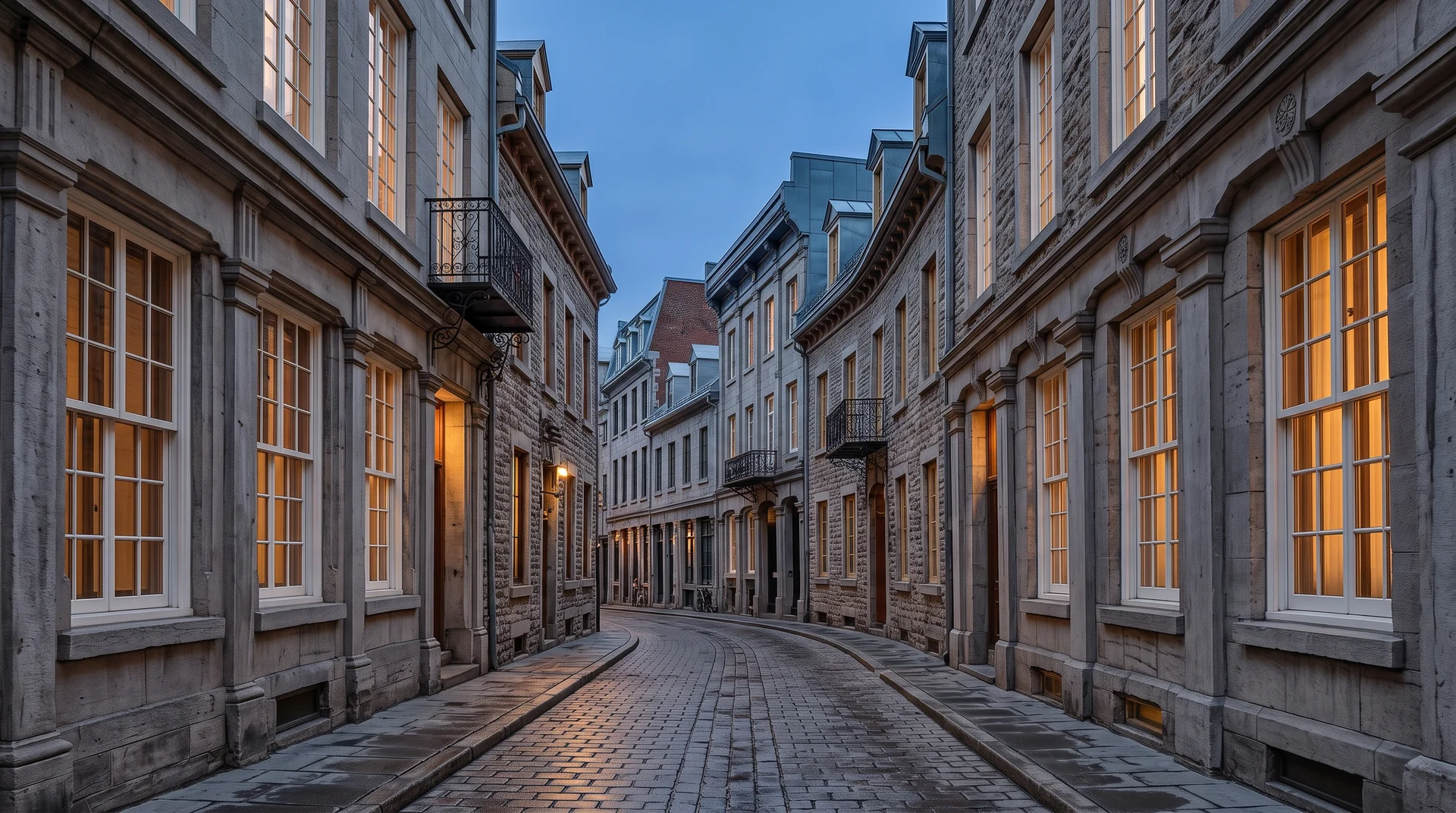
Old Montréal’s lighting plan includes renewing what exists because its continuation has two strands: lighting new buildings and upgrading earlier installations. That is what the city’s 2024–2033 capital planning sheet describes, rather than a report of work completed today.
That distinction interests us for a home. When reconsidering your lighting, we recommend starting with what you want to keep. The next project does not necessarily need a new idea everywhere. It can begin with an intention you still enjoy but would like to define more clearly.
A project with a history
The Canadian Society of Landscape Architects’ historical entry dates the start of the lighting plan’s implementation to 1996 and credits Groupe Cardinal Hardy, now Lemay. It describes an overall nighttime vision for the district.
What we take from that is continuity. A project can retain a recognizable intention while prompting new decisions. To us, keeping a direction does not mean freezing every detail forever.
At home, we suggest a similar question: what still belongs to the result you enjoy? It might be the emphasis on the entrance, a garden corner or a view from the kitchen. Those are your preferences, not a diagnosis of the equipment.
What the municipal document actually proposes
In the 2024–2033 capital programme’s “Plan lumière” sheet, the city combines functional lighting with architectural illumination. It proposes work on new buildings alongside upgrades to lighting installed during earlier phases.
“Proposes” matters here. A planning sheet does not establish that a particular job is finished, that a budget has been spent or that every fixture on a street has been replaced. We are not presenting this document as a technical inspection of the district in 2026.
Our reading is simpler: the project makes room for what already exists. We like that discipline for a home. Before requesting a new proposal, take time to describe the qualities of the previous approach that you want to preserve.
Separate a preference from something to have assessed
We suggest preparing two lists. On the first, write what you would like to see differently: a quieter area, a more prominent entrance, a garden that feels better connected to the facade. On the second, record the specific observations you want to discuss.
For example, “I would prefer this part to be less prominent” states a preference. “This point does not turn on” describes a behaviour. Those are different conversations. The first concerns your intention; the second calls for assessment before deciding what to do.
Avoid turning an observation into a technical conclusion. We are offering neither a repair method nor a promise of compatibility with an existing system here. Our advice is to describe what you notice and have the possibilities clarified before choosing an intervention.
The exterior lighting page is a starting point for preparing the visual side of that discussion.
Keep a simple record of your intention
We recommend a small project file: a few photographs, a description of what you like and the questions still open. It does not need to become a technical manual. The aim is to explain the desired result in your own words.
You can distinguish three things: what you want to retain, what you would like to change and what you want assessed first. That last category helps avoid deciding too soon that everything needs replacement or, conversely, that everything can stay.
If you take photographs again later, choose the same viewpoints where possible. Use them to support a conversation without expecting them alone to measure the installation’s performance. Note changes in your habits too: a new place to sit, another entrance used in the evening, a view that has become more important to you.
Consider the place as people use it
The city’s Old Montréal protection and enhancement plan presents the district as a residential neighbourhood, a heritage place and a tourist destination. That context reminds us not to judge a project only from its most spectacular viewpoint.
For a residential property, we suggest describing the ordinary evening as well. Which view do you expect to enjoy often? Which space do you actually use? Which part of the project mainly answers an occasional wish? We recommend making those priorities visible in the conversation.
To explore the relationship between house and grounds, see our landscape lighting page. When preparing a local project, consult our service area page as your reference.
Common questions
Does the lighting plan concern only new buildings?
No. The 2024–2033 municipal sheet also proposes upgrades to installations from earlier phases. It describes project intentions, not confirmation that all the work has been completed.
Should I replace lighting that no longer matches my taste?
This article cannot determine that. We recommend separating preferences from technical observations, then having the options for your installation clarified.
Is this a repair guide?
No. It is a preparation method for discussing what exists and the result you want. It prescribes no electrical intervention or hardware compatibility.
What should I prepare before discussing a new project?
We suggest a few photographs, a short list of what you want to preserve and the questions to have assessed. Begin with your intention without assuming the solution.