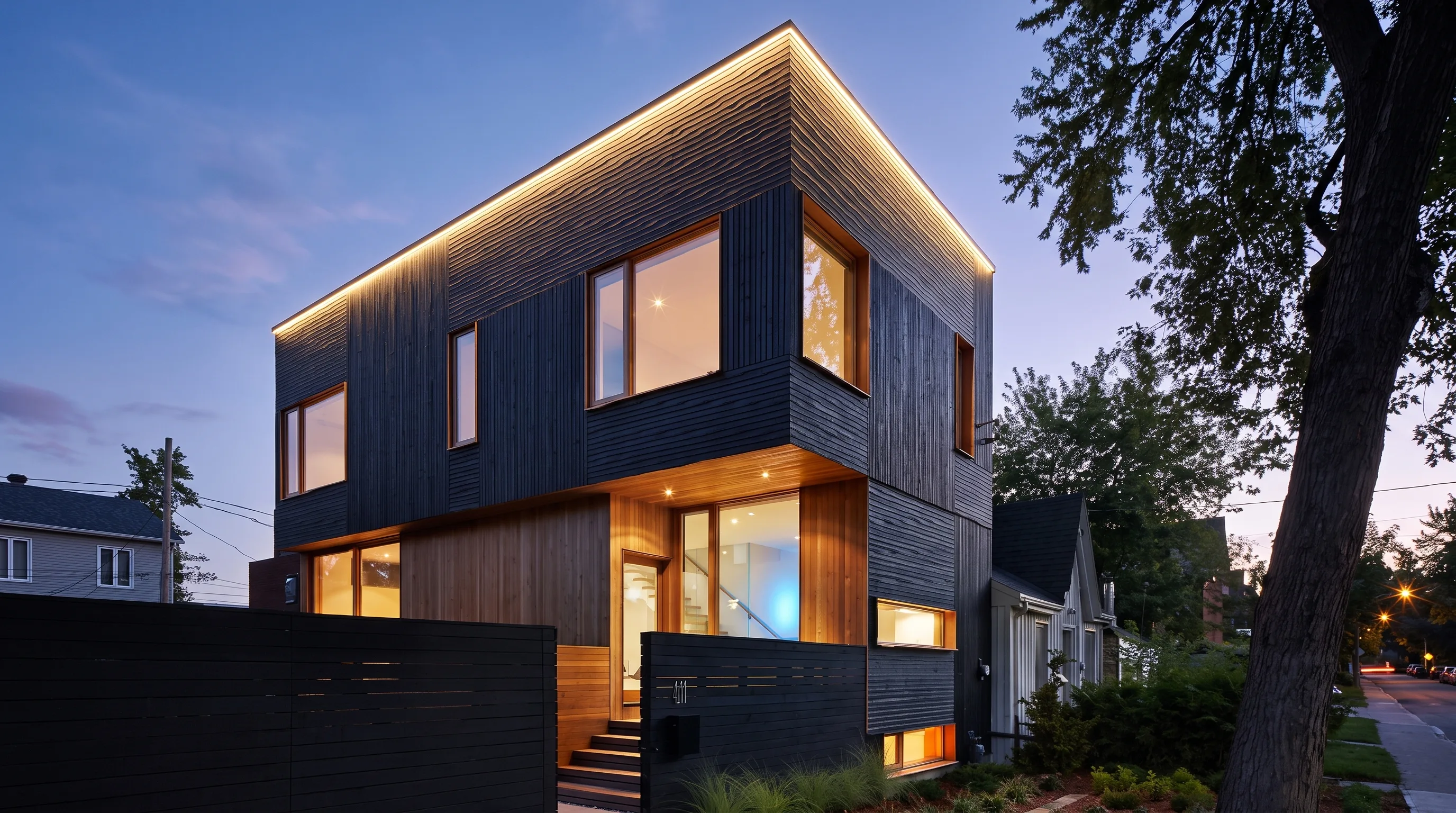
Both approaches start from the same idea: individually addressable light points that software drives one at a time. WLED — the open-source firmware that runs addressable LED strips inside smart homes — and a permanent residential system like ours share that foundation. They diverge almost immediately after, on hardware robustness, how well they survive a Quebec winter, warranty, and the kind of project each one is for. Here’s the honest comparison, with no tech snobbery.
What WLED is, simply
WLED is free, open-source firmware that runs on low-cost controllers (often ESP32-class boards) to drive addressable pixel strips. Once set up, you control it from your phone, a browser, or a smart-home hub like Home Assistant, and it handles scenes, schedules and, with the right hardware, per-pixel colour effects.
It’s a superb entry point into addressable lighting, and it’s genuinely fun to tinker with. But read it for what it is: a hobby project, installed by you.
The real difference: what survives a Montreal winter
WLED doesn’t handle hardware; it handles software. The cabling, connectors, sealing and rail are yours to source and install. An LED strip meant for indoors or inside furniture simply won’t hold up to the snow, frost and freeze-thaw cycles of a Quebec cornice.
A permanent outdoor system is built the other way around: hardware comes first. The components are rated IP68 and tested to −40 °C — the order of magnitude of a Quebec winter — and the aluminum rail mounts under the soffit, shielded from direct snow load. WLED indoors, in a cove or behind drywall, is fine; on a roofline, it’s the hardware that decides whether it survives.
Controller and warranty: where “system” earns its name
With WLED, the controller and pixels are parts you buy and hope last. With a signed residential project, the controller and pixels are warranted for 12 years, light bars and landscape lighting for 3, and labour is covered for 3. The LEDs carry an on-the-order-of-50,000-hour lifespan. That isn’t marketing: it’s the difference between hand-crafting a masterpiece and buying a complete system whose longevity you stand behind.
That said, one rule stays true: maintenance beyond the warranties is billed hourly, as with any serious contractor. Better to know that before you compare.
How to choose, honestly
Ask yourself one question: do you want a project, or a permanent result? If you want to learn, experiment and drive pixels in your kitchen or office — go WLED and enjoy yourself, it’s a great tool. Voice and smart-home setups alongside our interior lighting are possible too; ask us during your consultation and we’ll recommend what works best with your system.
If you want a roofline that lights reliably all year, with no ladder in December and no repair every spring, you’re looking for a permanent system built for outdoors — that’s our exterior lighting. Both are legitimate; they answer different briefs.
For scenes, the calendar does the work
The last confusion is believing you need a smart home to have scenes. You don’t: our controller programs a calendar and scenes the same way — warm white almost every evening, colour for holidays — without needing to be wired into a home-automation ecosystem. It’s simpler for most homeowners, and the explanations are on the FAQ page.
Common questions
Can WLED drive the same kind of strips? Yes, that’s exactly where it shines: it handles addressable pixels and a lot of effects. What it doesn’t provide is the rated hardware, installation, outdoor sealing and warranty — everything a residential system includes.
Is the system rated to −40 °C? Yes. The exterior components are rated IP68 and tested to −40 °C, and the rail mounts under the soffit rather than in direct snow load.
Do I need a smart home to have scheduled scenes? No. The controller holds scenes and the schedule on its own. It doesn’t need to be connected to a home-automation ecosystem to change colour or come on at dusk.
Does it cost more than a DIY WLED strip? A complete residential project starts around a $3,000–5,000 Starter, a $5,000–15,000 Standard, and $20,000+ — often beyond $50,000 — for a full exterior, interior and backyard scope. The difference is hardware, installation and warranty.